
Fire Safety Training Philippines: DOLE-Compliant Guide for Safety Officers
Posted on March 10, 2026

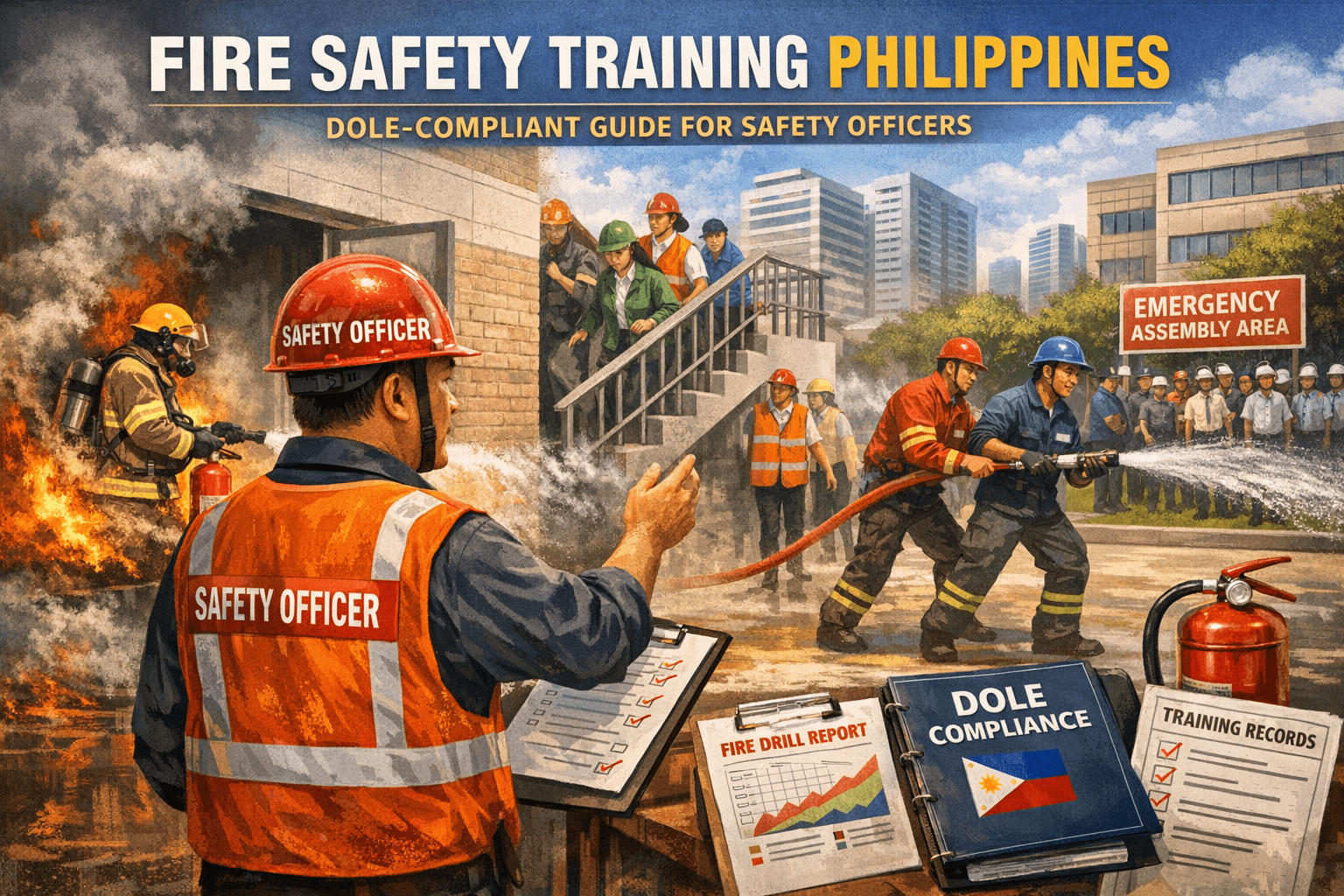
Fire Safety Training Philippines: DOLE-Compliant Guide for Safety Officers
Fire Safety Training in the Philippines becomes especially relevant every March during Fire Prevention Month. For Safety Officers and Compliance Managers, this is more than a reminder. It is an opportunity to strengthen systems, improve documentation, and ensure teams are prepared when it matters most.
Prepared teams respond better under pressure. And preparation starts with structured, scalable training programs designed for real workplace conditions.
What Is Fire Safety Training in the Philippines?
Fire safety training in the Philippines is a structured workplace program designed to prepare employees for fire emergencies, conduct compliant fire drills, and maintain documentation aligned with Department of Labor and Employment (DOLE) workplace safety regulations.
For organizations with 300+ employees, this includes standardized drill execution, emergency response coordination, and proper record-keeping to support audit readiness.
Why Fire Safety Month in the Philippines Matters
March is nationally recognized as Fire Prevention Month in the Philippines. Businesses are encouraged to review fire prevention protocols, conduct drills, and reinforce emergency preparedness across departments.
For medium and large organizations, fire safety compliance involves:
- Regularly scheduled and properly documented fire drills
- Clear evacuation procedures
- Assigned emergency response teams
- Organized documentation ready for DOLE inspection
Workplace fire safety programs should align with guidelines from the Department of Labor and Employment (DOLE) and related occupational safety standards. Fire Safety Month is the right time to evaluate whether current systems truly meet compliance expectations.
The Critical Role of Safety Officers and Compliance Managers
Safety Officers play a central role in implementing fire safety training programs. They coordinate drills, manage attendance tracking, document performance, and ensure corrective actions are recorded.
In organizations with multiple departments, branches, or shifting schedules, maintaining consistency can be challenging. Without structured systems, documentation gaps occur. These gaps create risks during audits and inspections.
Structured workplace safety training programs help standardize learning across teams, making it easier for Safety Officers to deploy training at scale.
How Structured Fire Safety Training Supports DOLE Compliance
DOLE fire safety compliance is not only about conducting drills. It also requires proof of implementation, proper documentation, and continuous improvement.
Effective fire safety training in the Philippines should support:
- Structured drill execution and evaluation
- Clear documentation and record-keeping practices
- Standardized emergency response roles
- Scalable deployment for 300+ employees
- Audit-ready reporting systems
Digital learning platforms allow Safety Officers and Compliance Managers to centralize records, track participation, and maintain organized documentation across locations.
For organizations preparing for inspections, investing in emergency preparedness training courses strengthens both compliance and operational resilience.
Common Gaps in Workplace Fire Safety Programs
During Fire Prevention Month, many organizations discover gaps such as:
- Inconsistent drill documentation
- Lack of post-drill evaluation reports
- Unclear employee role assignments
- Training not rolled out uniformly across departments
These issues may not be obvious until inspection season. A structured Safety Officer training framework prevents these gaps before they become compliance risks.
Building a Culture of Emergency Preparedness
Emergency preparedness training in the Philippines should move beyond compliance. It should build confidence.
When employees understand evacuation routes, alarm protocols, and assigned responsibilities, response becomes coordinated rather than reactive.
Prepared teams respond better under pressure. That principle applies whether you operate a single facility or manage multiple sites nationwide.
Support Your Safety Officers This Fire Safety Month
Fire Safety Month is the right time to strengthen systems, not just awareness.
If your organization is scaling fire safety training across departments or preparing for regulatory inspections, structured, DOLE-aligned programs can simplify implementation while improving audit readiness.
Strengthen Your Fire Safety Program Today
Support your Safety Officers and Compliance Managers with scalable fire safety training designed for large organizations.
Learn More About Safety and Health Courses
Frequently Asked Questions About Fire Safety Training
Is fire safety training mandatory for companies in the Philippines?
Workplace safety regulations require employers to implement fire prevention measures, conduct drills, and maintain documentation to protect employees and demonstrate compliance readiness during inspections.
How often should fire drills be conducted?
Fire drills should be conducted regularly according to company policy and regulatory guidance. Proper documentation must be maintained to support audit and inspection requirements.
Why is documentation important during Fire Safety Month?
Documentation serves as proof that drills were conducted, employees were trained, and safety systems are active. Organized records protect the organization during compliance audits.