Workplace Safety Training Philippines: Emergency Preparedness & Employee Wellbeing
Posted on April 14, 2026

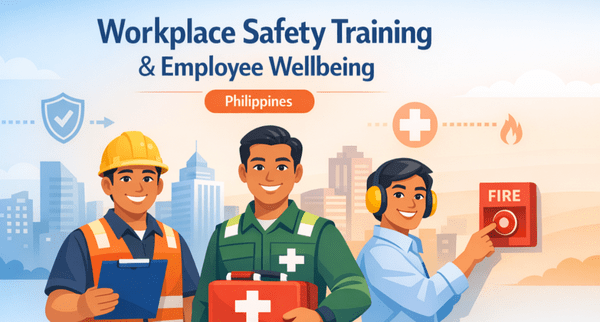
Workplace safety training in the Philippines is becoming more important as organizations face both physical risks and growing workplace wellbeing concerns.
As temperatures rise during the summer months in the Philippines, workplace risks often increase as well. Many organizations review their workplace safety training programs during this time to ensure teams are prepared for potential hazards.
However, workplace safety today goes beyond physical risks.
Many HR and Learning & Development teams are also seeing the growing impact of stress, fatigue, and emergency preparedness gaps among employees. These factors can affect how effectively teams respond during critical situations.
This is why workplace safety training in the Philippines must now address both emergency readiness and employee wellbeing.
When organizations prepare employees in both areas, they build safer and more resilient workplaces.
Workplace Safety Training in the Philippines Is Evolving
Traditionally, workplace safety programs focused on physical hazards such as fire prevention, equipment safety, and evacuation procedures.
While these remain essential, organizations are increasingly recognizing that psychological readiness and workplace wellbeing also play an important role in safety outcomes.
During emergencies such as earthquakes, fires, or workplace incidents, employees must make quick decisions under pressure. Without proper training, stress and uncertainty can slow response times and increase risk.
A more effective safety program integrates two key elements:
- Emergency preparedness training
- Mental and psychosocial wellbeing awareness
Together, these areas help employees respond more confidently and responsibly during unexpected situations.
Why Prepared Teams Improve Workplace Safety
Organizations that invest in workplace safety training often see improvements beyond regulatory compliance.
Prepared teams contribute to safer operations and stronger organizational resilience.
Preventing Workplace Incidents
Employees who understand safety protocols and potential hazards are more likely to prevent incidents before they happen.
Reducing Compliance Gaps
Regular safety training helps organizations align with occupational safety requirements and maintain consistent knowledge across teams.
Supporting Employee Wellbeing
Workplaces that prioritize both safety and wellbeing create environments where employees feel supported and capable during challenging situations.
Faster Emergency Response
When employees know what to do during emergencies, response times improve and confusion is minimized.
In many cases, organizations with well-prepared teams recover more quickly after unexpected events.
Questions to Ask When Reviewing Workplace Safety Training
For HR and L&D leaders reviewing their safety programs, it may be helpful to assess whether existing training still meets current workplace needs.
Consider asking the following questions:
- Are employees trained on emergency response procedures?
- Are teams prepared to respond to earthquakes or workplace incidents?
- Do employees know how to react effectively under pressure?
- Are workplace conditions supporting mental and psychosocial wellbeing?
- Are safety trainings easy to deploy across multiple teams or locations?
If there is uncertainty in any of these areas, it may be a good time to refresh workplace safety training initiatives.
Key Areas of Workplace Safety Training
Many organizations in the Philippines implement safety training programs that cover several essential areas.
These may include:
- MESH (Mandatory Eight-Hour Safety and Health Training)
- Workplace emergency preparedness training
- Earthquake preparedness and disaster response
- Office ergonomics and workplace health
- Workplace mental health awareness
Together, these programs help organizations create holistic safety strategies that support both compliance and employee wellbeing.
Preparing for World Day for Safety and Health at Work
Every year, World Day for Safety and Health at Work on April 28 highlights the importance of protecting workers and improving workplace conditions.
For organizations reviewing their workplace safety training in the Philippines, this observance provides a valuable opportunity to reassess safety priorities and ensure employees are properly prepared.
A proactive approach to workplace safety does more than prevent incidents.
It helps build workplaces where employees are informed, confident, and ready to respond to challenges.